
You Don’t Need $1,000 to Start Investing in 2026 — You Need $5 and This 10-Minute Setup
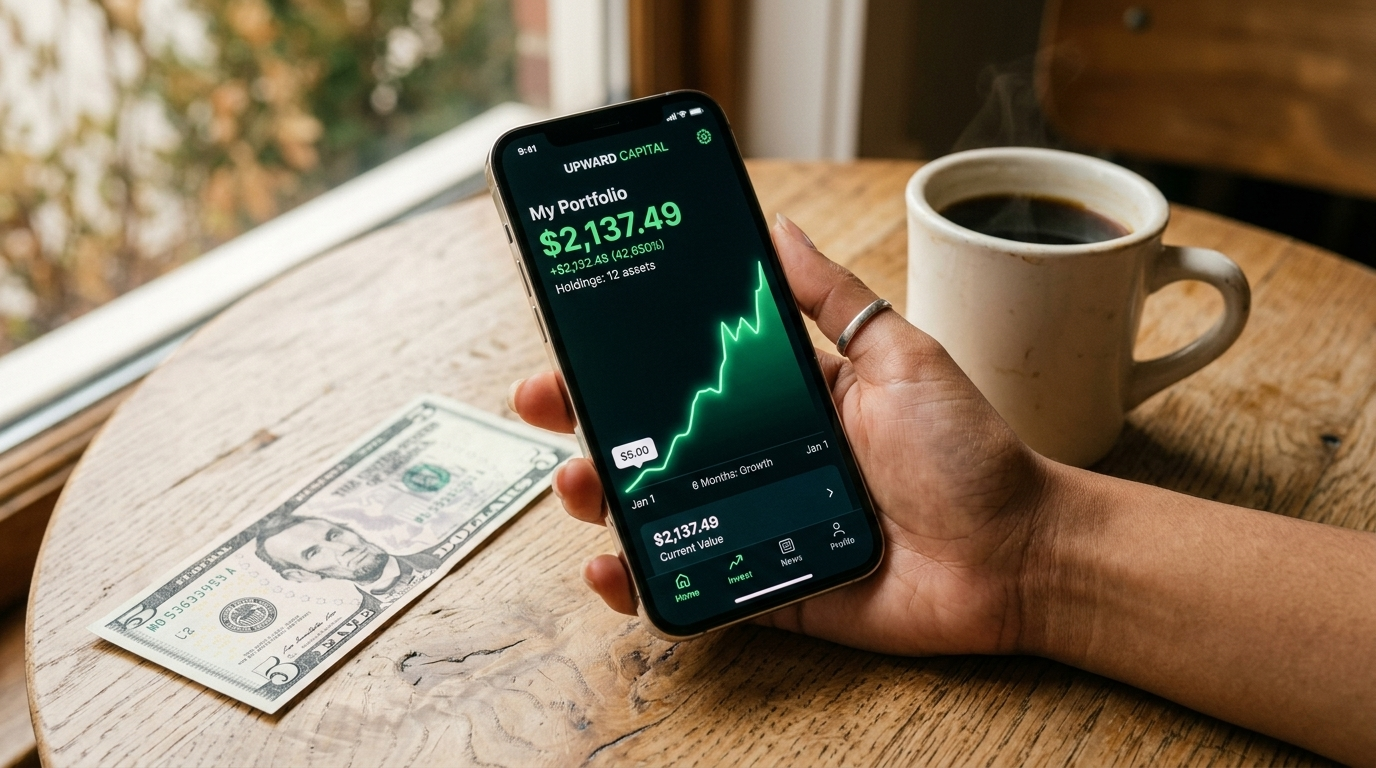
Think you need a fat bank account to invest? No cap, the rules have changed. Learn how to start investing with $5 in 2026 using this simple 10-minute setup.
Let’s keep it a buck for a second. If you’re scrolling through TikTok, Instagram, or X right now, you are probably seeing an endless parade of finance bros flexing their massive portfolios. They’re talking about “buying the dip,” trading options, and acting like dropping ten grand on a random tech stock is just a normal Tuesday afternoon. Honestly? It’s intimidating as hell.
For the longest time, the mainstream financial narrative has been incredibly gatekept. The overarching myth was that you needed a fat stack of cash—at least $1,000 or more—just to get a seat at the investing table. You might be sitting there reading this, thinking, “Bro, I barely have enough left over after rent, gas, and groceries. I definitely don’t have a spare grand to just throw into the stock market.”
But here is the massive reality check for 2026: That gatekeeping nonsense is officially dead 💀. You absolutely do not need thousands, hundreds, or even fifty bucks to get started. All you need is a literal $5 bill (or the digital equivalent) and about 10 minutes to set up a system that runs completely on autopilot.

We are currently living in the golden era of retail investing. Financial technology (FinTech) has entirely leveled the playing field, making it so anyone with a smartphone and an internet connection can start building real generational wealth. In this comprehensive guide, we are going to break down exactly how you can turn your spare pocket change into a growing, compound-interest-generating portfolio. There will be no complicated Wall Street jargon, no fake guru BS trying to sell you a course, and definitely no need to eat ramen for a month just to afford your first investment. Let’s secure the bag 💰.
The $1,000 Investing Myth is Officially Cancelled
To understand why investing with $5 is such a massive flex today, you have to understand how terrible it used to be. Back in the day (and by that, I mean just 10 to 15 years ago), investing was a massive, expensive hassle.
You had to physically call up a broker or use a clunky early-internet website. Worse, you had to pay a ridiculous $10 to $20 “commission fee” just for the privilege of making a single trade. On top of that, the market forced you to buy “full shares.”
If a highly successful tech company’s stock was trading at $500 a share, you needed exactly $500 (plus the commission fee) just to own a single piece of that pie. If you only had $100 to your name, you literally could not invest in that company. You went hungry. It was a massive L for the average working-class person. This archaic system intentionally kept the wealth locked up at the very top, while everyday folks just kept their hard-earned cash in traditional savings accounts earning basically zero percent interest while inflation ate away their purchasing power.


Fast forward to 2026. The game has entirely flipped on its head. Thanks to the absolute blessing that is fractional shares, the old boomer rules are officially out the window.
What Are Fractional Shares?
Think of a company’s stock like a massive pizza 🍕. In the past, the stock market forced you to buy the entire pizza at once. Today, modern brokerages allow you to buy just a single slice, or even a tiny bite of a slice, based on exactly how much money you want to spend.
If your favorite artificial intelligence company is trading at $1,000 a share, but you only have $5 to your name, you can still buy exactly $5 worth of that stock. You become a legal part-owner of that company, just on a much smaller scale. The math scales perfectly. When the overall stock price goes up by 10%, your $5 investment turns into $5.50.
This is the secret sauce that makes starting with a fiver not just possible, but a highly effective wealth-building strategy. You no longer have to wait on the sidelines to accumulate a massive lump sum. You can start participating in the global economy right this very second.
Once you get comfortable with this $5 foundation, you’ll inevitably want to level up. When you are ready to scale, you should definitely read our comprehensive breakdown on How to Start Investing With $100 in 2026: The Ultimate Grind Guide. But for now, let’s keep our focus laser-sharp on the absolute basics with your $5.
The Math: What Actually Happens When You Invest $5?
I know exactly what the skeptics are thinking right now. “Okay cool, I can invest $5. But what is the actual point? It’s just five bucks. That is not going to buy me a mansion or let me retire early.”
And let’s keep it 100: You are right. A single, isolated $5 investment made one time in your life is not going to buy you a Lamborghini. But investing isn’t about making one lucky, lottery-ticket move. True investing is about building an automated habit and letting compound interest do the heavy lifting for you over an extended period of time.
The Superpower of the S&P 500
Let’s look at some actual, hard numbers so you can see the vision. The S&P 500 is a stock market index that tracks the performance of the 500 largest, most profitable companies in the United States (think Apple, Microsoft, Amazon, Nvidia, etc.). Historically, the S&P 500 has returned an average of about 10% per year over the long term. (Fun fact to show you its potential: in 2024, the S&P 500 actually delivered an insane 23% return!).
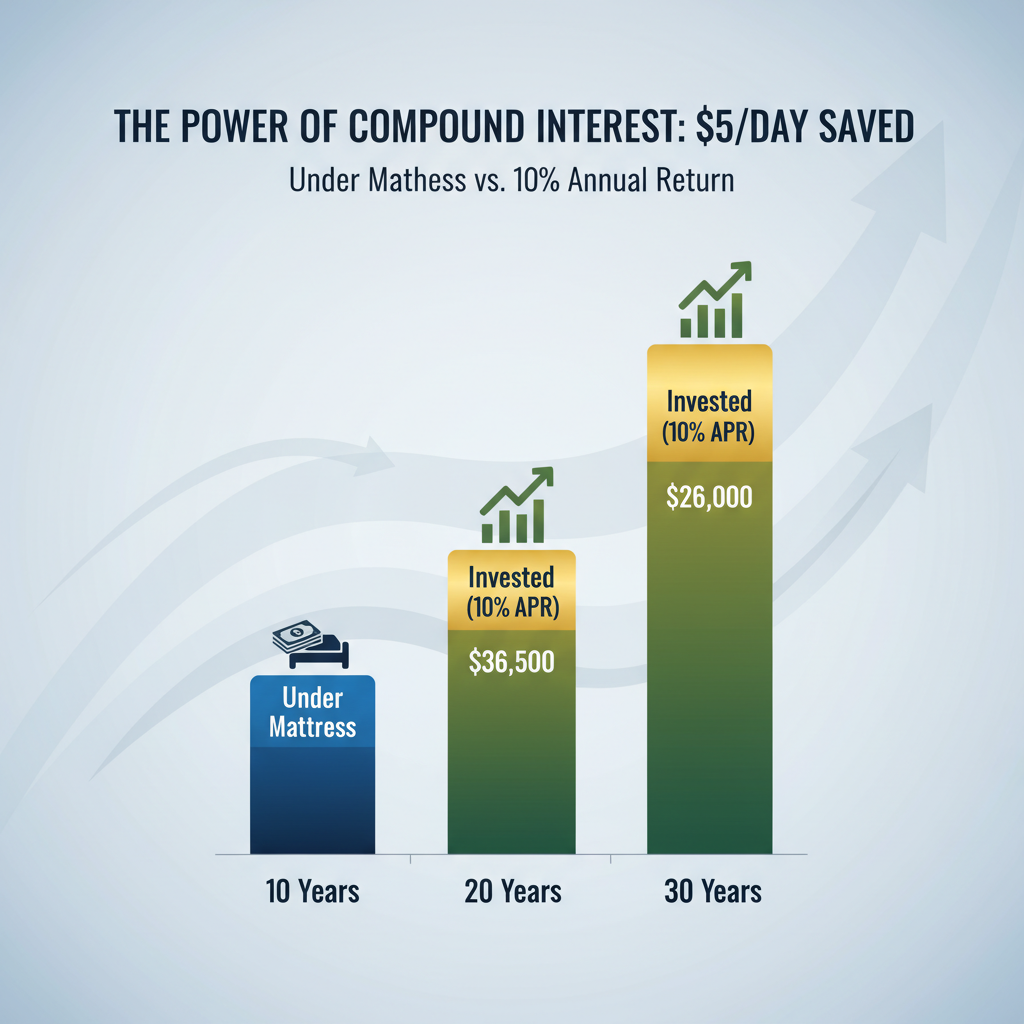
If you take $5 and invest it just one time, and it grows at a 10% return for 10 years, it grows to about $12.97. Big yawn, right?
But what if you automate it? What if you commit to investing just $5 a day? That is less than the cost of a fancy iced coffee or an energy drink and a bag of chips at the gas station.
Let’s run the math on a $5 daily habit:
- $5 a day equals roughly $150 a month.
- In 1 year, you have quietly invested $1,800 without even feeling the pinch in your budget.
- In 10 years, assuming that historical 10% average annual return, your pocket change grows to over $30,000.
- In 30 years? That $5 a day habit violently snowballs into over $340,000. 🤯
That right there is the pure magic of compounding. You aren’t just earning a return on your original $5; you are earning returns on your returns. It is like a snowball rolling down a massive hill, gathering more snow and getting exponentially larger and faster by the time it reaches the bottom.
The hardest part of this entire journey is simply taking the very first step to get the snowball rolling. Once the automated system is running, math takes the wheel.
The “Spare Change” Revolution: Micro-Investing Explained
So, how do you actually execute this strategy without driving yourself crazy trying to manually transfer $5 every single day? Enter the booming world of micro-investing.
Micro-investing apps were specifically engineered for people who feel like they don’t have enough capital to invest. These modern platforms have stripped away all the complicated charts, confusing Wall Street lingo, and overwhelming user interfaces. They make investing as easy as ordering food on DoorDash.
Here are the core features that make micro-investing a major W for beginners in 2026:
- Round-Ups: This is arguably the most famous feature of the micro-investing revolution. You link your everyday debit or credit card to the app securely. Every time you buy something, the app automatically rounds up the purchase to the nearest whole dollar and invests the spare change. Buy a iced latte for $4.50? The app secretly pulls $0.50 from your account and throws it directly into the stock market. You literally do not even notice the money leaving your account, but over a month, you could effortlessly invest $30 to $50.
- Auto-Transfers (Set and Forget): You can set the app to pull $5 a week, $10 every time you get a paycheck, or whatever microscopic amount you want, completely automatically. It operates in the background of your life.
- Robo-Advising: You don’t have to stress about picking individual stocks. The app will ask you a few simple questions about your age, your financial goals, and your risk tolerance. Based on your answers, its algorithm automatically builds a fully diversified portfolio for you.
Some of the heaviest hitters in the 2026 micro-investing space include Acorns, Stash, SoFi, and Wealthfront. If you want a deep dive into which specific platform fits your exact vibe and financial needs, take a look at our comprehensive breakdown: The Ultimate Guide to the Best Investment Apps in the USA (2026) 🚀.
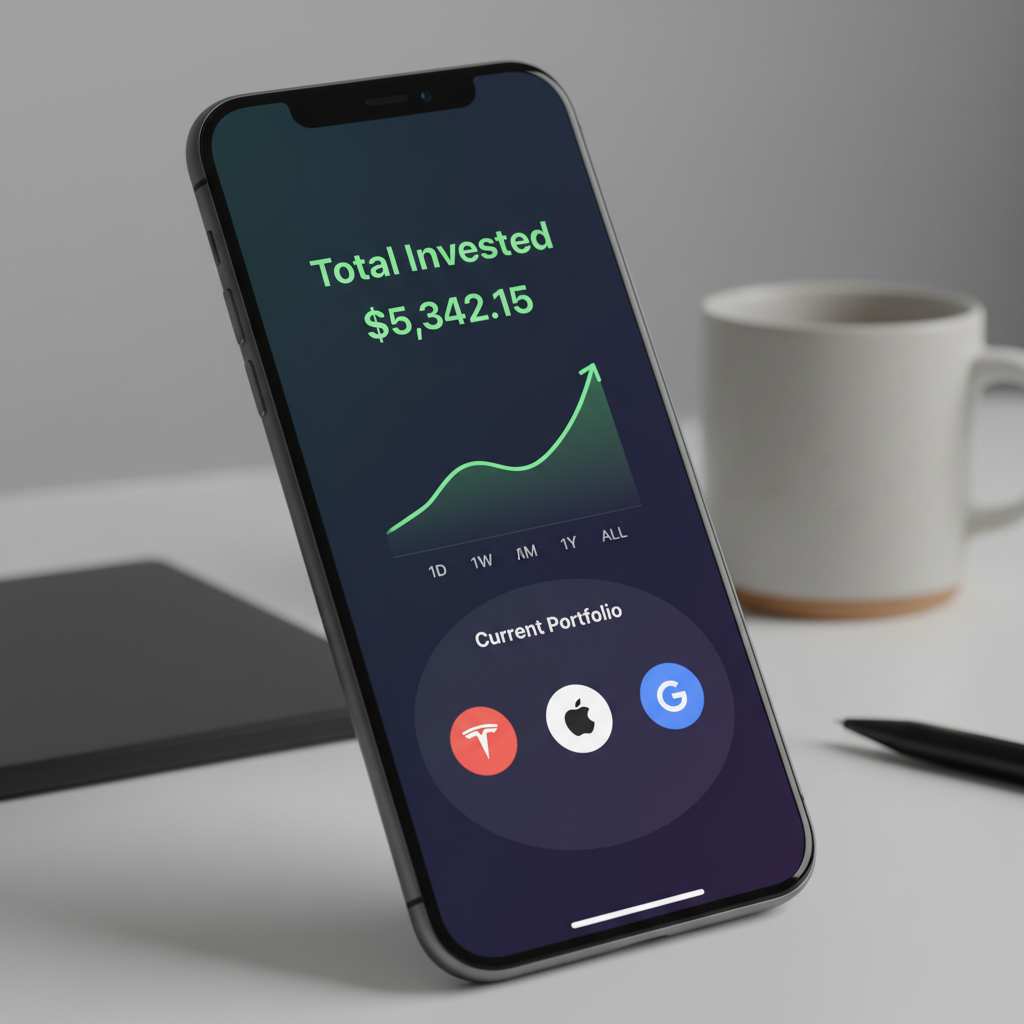
Your 10-Minute $5 Setup (The Step-by-Step Playbook)
Alright, enough theory and hype. It is time to take tangible action. Grab your phone, get comfortable on the couch, and let’s set this system up right now. This will literally take less time than it takes to scroll through your For You Page.
Step 1: Pick Your Application
Your first move is deciding where you want to plant your $5.
- For the ultimate hands-off, spare-change experience: Download Acorns. It is the king of the “round-up” feature.
- For zero-fee fractional shares of specific companies or ETFs: Go with Robinhood, Fidelity, or Moomoo.
Pro Tip: Fidelity is incredibly highly recommended for beginners right now because it offers absolute zero-commission trading, allows fractional shares (they creatively call it “Fidelity Slices”), and has stellar, actual-human customer support if you get confused.
Step 2: Open and Verify Your Account
Once the app is downloaded, you will need to provide some basic KYC (Know Your Customer) info. This includes your full name, home address, employment status, and your Social Security Number.
Pause: Do not panic when they ask for your SSN. This is a strict legal requirement by the US Government and the IRS for tax purposes. Legitimate, SIPC-insured brokerages use bank-level encryption to protect this data. It usually takes about 3 to 5 minutes to fill out the digital paperwork and get approved.
Step 3: Link Your Funding Source
You need a way to get money from your regular bank into the investment app. Most modern apps use a highly secure third-party service called Plaid to connect your checking account instantly.
If your personal finances are currently a chaotic mess, and you are struggling to even find a spare $5 to link, you need to structure your money flow better before you start. A highly recommended prerequisite strategy is reading about how Americans Are Quietly Saving $800/Month Using This ‘Boring’ 3-Account System That Banks Don’t Want You to Know. Getting your checking, savings, and bills accounts highly organized makes the investing process utterly effortless.
Step 4: Transfer Your First $5
Hit the “Transfer” or “Deposit” button in the app. Move exactly $5 from your linked bank account into your new investment account. Boom. You have successfully funded your brokerage.
Step 5: Buy Your First Slice (And Automate It!)
Do not just leave the $5 sitting there in the account as cash. Uninvested cash doesn’t grow. You need to actually purchase an asset.
Navigate to the search bar and look for a broad S&P 500 ETF (like the ticker symbol VOO or SPY). Select “Buy,” make sure you toggle the option to buy in “Dollars” instead of “Shares,” and type in $5.
Hit submit. Congratulations, you are officially an investor. 🥳
Now, to make this completely foolproof, go into the app’s settings and turn on “Recurring Investments.” Set it to automatically buy $5 every single week (or whatever interval you prefer). Now you can literally delete the app off your home screen, go live your life, and let the algorithm build your wealth in the background.
Where Exactly Should You Put Your $5? (No Cap)
One of the biggest, most catastrophic mistakes beginners make is trying to pick the next massive “moonshot” stock. They hear their coworker talking about some obscure micro-cap crypto coin or a random penny stock and think, “That is my golden ticket to getting rich quick!”
Spoiler alert: It is usually a one-way ticket to losing your $5.
When you are just starting out, you want consistency, extreme diversification, and low overall risk. You are not trying to outsmart the global financial market; you are simply trying to be the market.
The Ultimate Cheat Code: Broad Market ETFs
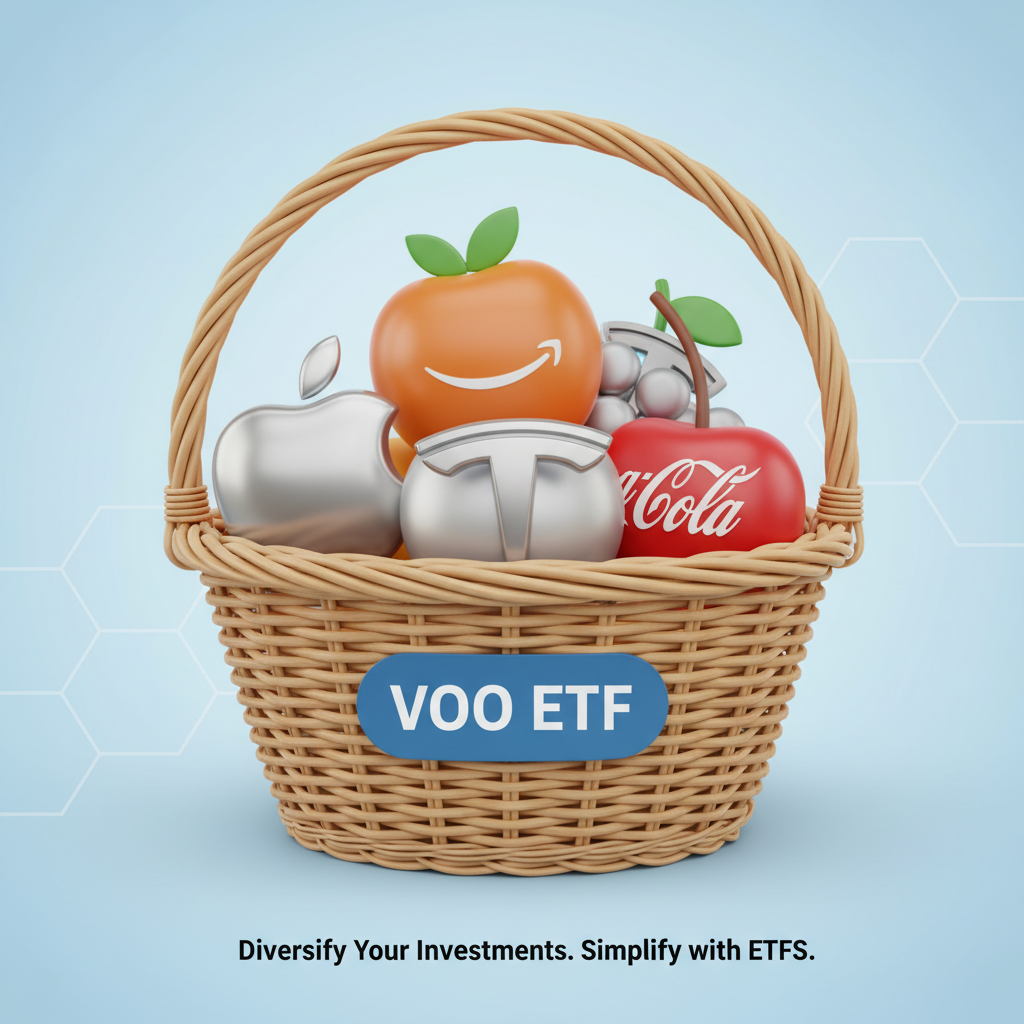
An ETF (Exchange-Traded Fund) is essentially a massive digital basket that holds hundreds or even thousands of different stocks bundled into one single, easy-to-buy package. When you buy a fractional share of a broad ETF, you are instantly spreading your $5 across the entire economy.
Here are the standard, tried-and-true ETFs that almost all financial advisors recommend for beginners building a foundation:
- VOO (Vanguard S&P 500 ETF): This tracks the 500 largest, most dominant companies in the United States. With one purchase, you get a tiny, fractional piece of Apple, Microsoft, Amazon, Google, Meta, and 495 other massive corporations. It is the undisputed gold standard of beginner investing.
- VTI (Vanguard Total Stock Market ETF): This is similar to VOO, but instead of just the top 500 companies, it includes thousands of mid-size and small-size U.S. companies as well. It gives you exposure to the literal entire US stock market in one ticker symbol.
- SCHD (Schwab US Dividend Equity ETF): This one is for the passive income lovers. It focuses heavily on mature, stable companies that pay consistent dividends (which is essentially cash paid out directly to shareholders just for owning the stock). You can use this to start “dividend snowballing,” where you automatically reinvest those cash payouts to buy even more shares.
If you want to dive significantly deeper into how to structure your overall portfolio as your account inevitably grows over the years, check out The Ultimate Playbook: Best Investment Strategies for Beginners in 2026. It breaks down the exact percentage allocations you should aim for as your wealth scales up.
Finding the $5 (Because “I’m Broke” Isn’t an Excuse)
I hear the same objection in the comments all the time: “This sounds great, but I literally have zero dollars left at the end of the month. I am tapped out.”
I totally get it. Inflation over the last few years has been absolutely brutal, and the cost of daily living is wild right now. But if we keep it 100, almost every single person has a “leak” in their monthly budget where $5 to $20 is slipping away completely unnoticed.
Here are three highly practical ways to free up that initial seed money without feeling like you are miserably sacrificing your happiness:
1. The 30-Day “No-Buy” Financial Reset
This is not a permanent, miserable lifestyle change; it is a temporary financial detox. For exactly 30 days, commit to buying absolutely zero non-essentials. No eating out at restaurants, no random Amazon purchases at 2 AM, no new clothes, no random snacks at the convenience store. You only pay for rent, utilities, basic groceries, and gas.
Take the exact money you would have spent and funnel it directly into your new investment account. Most people are shocked to find an extra $100 to $300 during this reset, and it totally alters their psychological perspective on impulsive spending.
2. Slay the Ghost Subscriptions
When was the last time you brutally audited your bank statement for recurring charges? You almost certainly have a tier of a streaming service you barely watch, an old gym membership you swore you’d use, or a random app subscription you haven’t opened in six months. Cancel just one $15/month subscription right now, and you instantly have $15 a month to auto-invest. That is free money hiding in plain sight.
3. Leverage Zero-Cost Digital Side Hustles
If your budget is truly bone-dry and there is nothing left to cut, you don’t need to save harder; you need to earn more. In 2026, there are countless ways to make a few extra bucks online with zero upfront monetary investment.
Taking legitimate online surveys, selling digital notion templates on Etsy, offering virtual assistant services, or doing freelance proofreading can easily generate $20 to $50 a week in your spare time. Funnel 100% of that side hustle money directly into your investment portfolio. You are basically converting your free time into compound interest.
Biggest Mistakes Beginners Make When Investing Pocket Change
When you finally start investing, the rush of excitement can sometimes lead to some totally avoidable, rookie blunders. Let’s make sure you don’t take an unnecessary L right out of the gate.
Mistake #1: Checking the App Every Single Day
When you buy your first $5 of the S&P 500, it is incredibly tempting to log in the next morning to see if you are rich yet.
The Reality Check: The stock market fluctuates every single day based on global news, interest rates, and institutional algorithms. If you check it constantly, you are going to get highly emotional. If your $5 drops to $4.80 on Tuesday, you might panic. Do yourself a massive favor: Delete the stock widget from your phone’s home screen. Set your automated transfers and forget it exists.
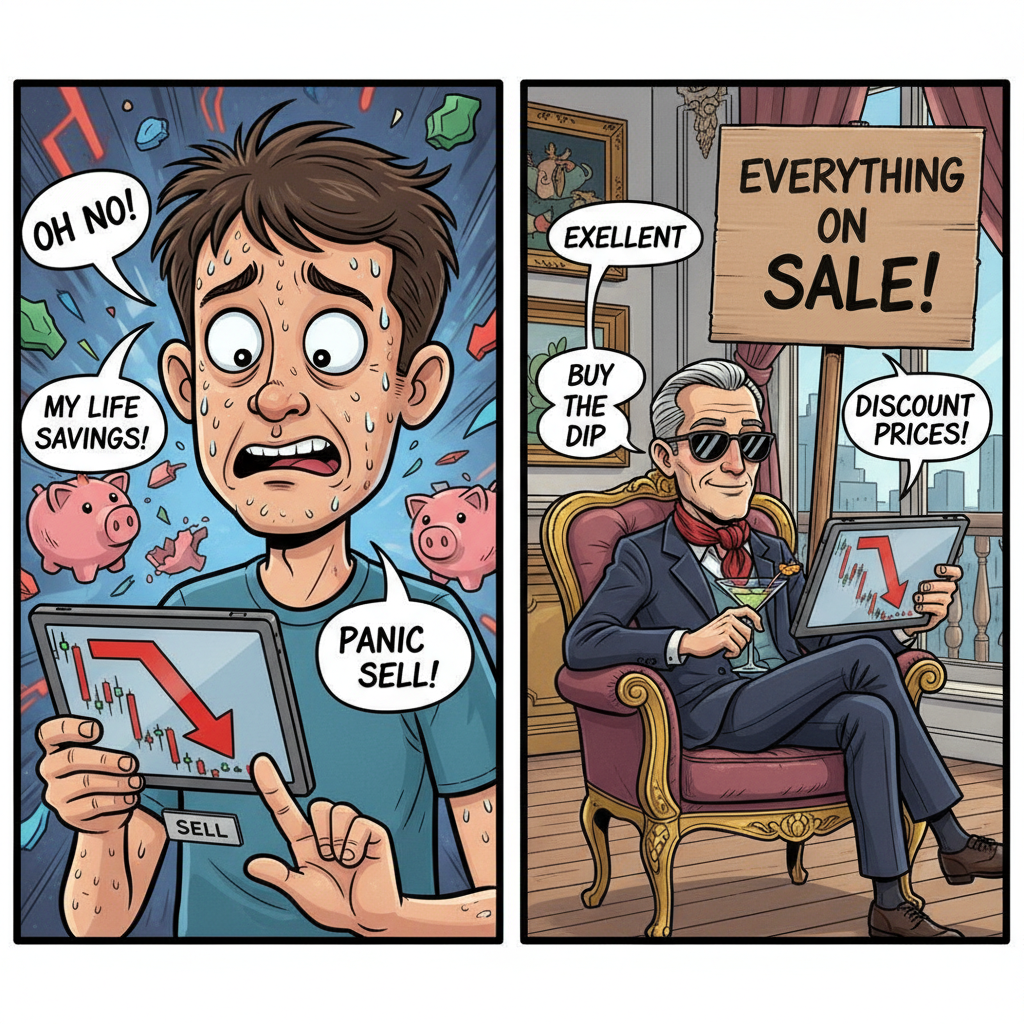
Mistake #2: Panic Selling During a Dip
Market corrections are 100% normal. Sometimes the overall market drops 10% or even 20% during a rough economic patch. When this happens, beginners freak out. They sell their investments at a loss to “stop the bleeding” and protect what little they have left.
The Flex: Wealthy, experienced investors do the exact opposite. When the market drops 20%, they see it as the greatest companies in the world going on a 20% off clearance sale. They buy more. Diamond hands, baby. Leave your money alone and ride the wave.
Mistake #3: Getting Eaten Alive by Flat Fees
If you are only investing $5 or $10 a month, you need to be hyper-aware of monthly account fees. Some older micro-investing apps charge a flat $3 to $5 a month just to have the account open. If you are only investing $5 a month, and the app takes $3 as a fee, you are instantly losing 60% of your money!
Make absolutely sure you are using a zero-fee brokerage (like Fidelity, Webull, or Robinhood) if your monthly contributions are going to be super small starting out.
Frequently Asked Questions (The 2026 Edition)
Can I really get rich off just a $5 investment?
Off a single, one-time $5 investment? Absolutely not. But investing $5 consistently (like every single day or every week) combined with the compound growth of the stock market over 20 to 30 years can absolutely make you wealthy. It is not about the initial amount; it is about building the habit of paying your future self first.
Is micro-investing safe? Could I lose all my money?
Yes, it is very safe as long as you use a reputable, SIPC-insured brokerage. Apps like Robinhood, Acorns, Webull, and Fidelity are highly regulated by the government. If the app’s parent company goes bankrupt, your investments are federally protected up to $500,000 by the SIPC.
However, this does not protect you from the stock market going down. If you buy bad stocks and they crash, you lose money. All investing involves some level of inherent market risk, which is why broad ETFs are recommended for safety.
Do I have to pay taxes on a tiny $5 investment?
You only pay taxes when you sell your investment for a profit (this is known as capital gains), or if the stock pays you a cash dividend. If you buy $5 of an ETF and just hold it securely in your account for 10 years, you do not owe any taxes on the growth while it is just sitting there compounding. When you do eventually sell years later, long-term capital gains tax rates are usually much lower and more favorable than your normal day-job income tax.
What if there is an emergency and I need my $5 back?
Unlike a rigid retirement account (like a 401k or an IRA) that aggressively penalizes you for withdrawing your money before you are 59½ years old, a standard taxable brokerage account is totally liquid. If you have an absolute emergency and need your cash to pay a bill, you can sell your fractional shares and transfer the money back to your checking account in about 2 to 3 business days. (But seriously, try not to do this—let it grow!)
Wrapping It Up: Your Next Move
The $1,000 barrier to entry is a dusty ghost story from the past. In 2026, there is zero excuse to let your hard-earned money rot in a checking account, slowly losing its purchasing power to inflation year after year.
You have the advanced technological tools right in your pocket. You have access to fractional shares. You have zero-commission brokerages fighting for your business. You literally only need $5 and a 10-minute block of free time to change the entire trajectory of your financial future.
Stop waiting for the “perfect time” to get your life together. Stop waiting until you get that massive raise at work. Stop waiting until you magically feel like you have “enough” money. The single most expensive mistake you can make in the world of investing is simply waiting on the sidelines while compound interest passes you by.
Take that $5, set up your auto-transfer, buy your first fractional slice of an S&P 500 ETF, and get back to living your life. Future you is going to be incredibly grateful that you started today. 🚀📈
We are moved by your loyalty as a reader — thank you for visiting our site and reading this post!


Hahahaha You are so good