How to Start Investing With $100 in 2026: The Ultimate Grind Guide
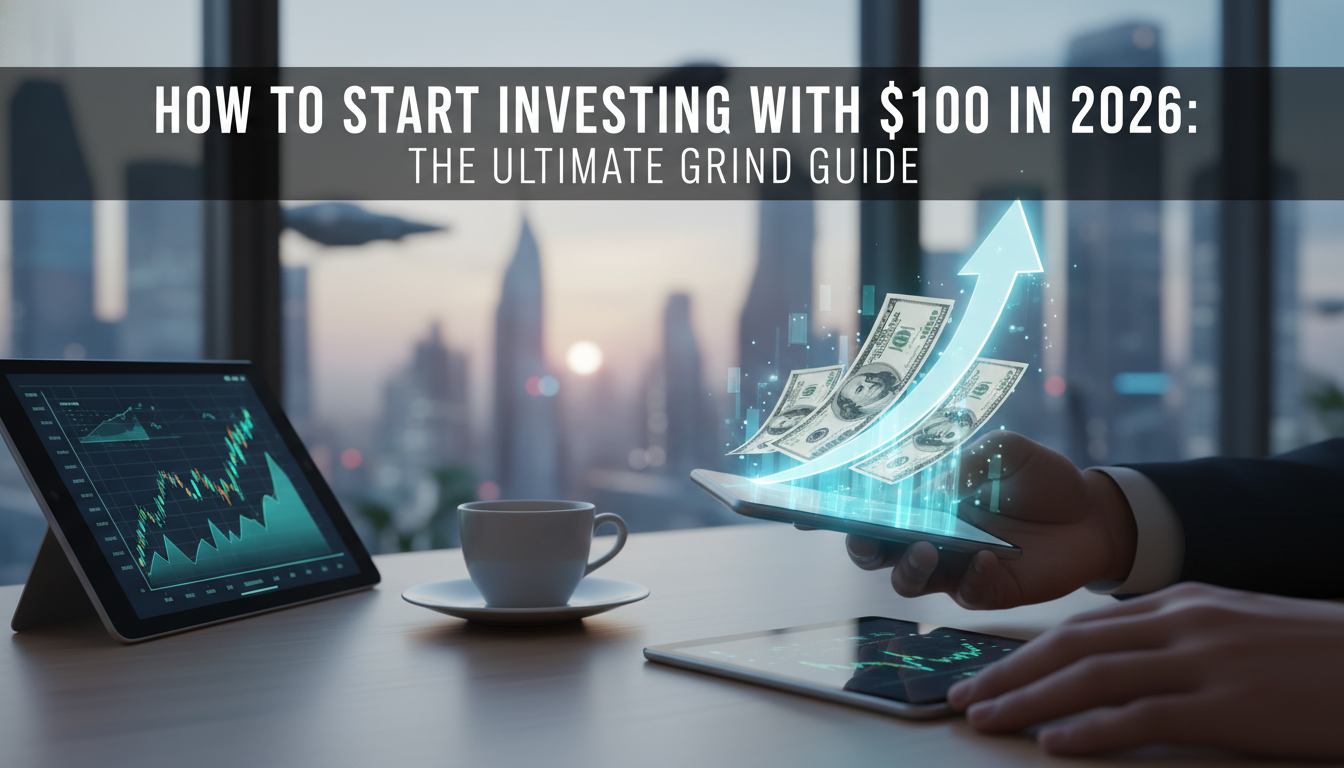
Think you need thousands to invest? Nope. Learn exactly how to start investing with $100 today using fractional shares, ETFs, and micro-investing apps.
Let’s keep it a buck for a second. When most people hear the word “investing,” they immediately picture dudes in tailored suits screaming on the floor of the New York Stock Exchange, or some tech bro flexing his massive crypto wallet on TikTok. It feels like an exclusive club where the bouncer checks your bank account before letting you in.
But guess what? The gatekeepers are gone. You absolutely do not need thousands of dollars to get in the game. If you’ve got a single Benjamin Franklin chilling in your wallet (or your checking account), you have enough to start building real, generational wealth.
I know what you’re thinking. “Bro, it’s just $100. What is that really gonna do for me?”
A lot, actually. The investment landscape has totally flipped over the last few years. Thanks to things like zero-commission trading and fractional shares, $100 is plenty of juice to get your money working for you.
This isn’t some get-rich-quick scheme. We aren’t out here trying to day-trade meme stocks or bet it all on a shady altcoin. We are talking about legit, proven strategies to grow your bag over time. So grab an energy drink or a coffee, and let’s dive deep into exactly how to start investing with $100 right now.
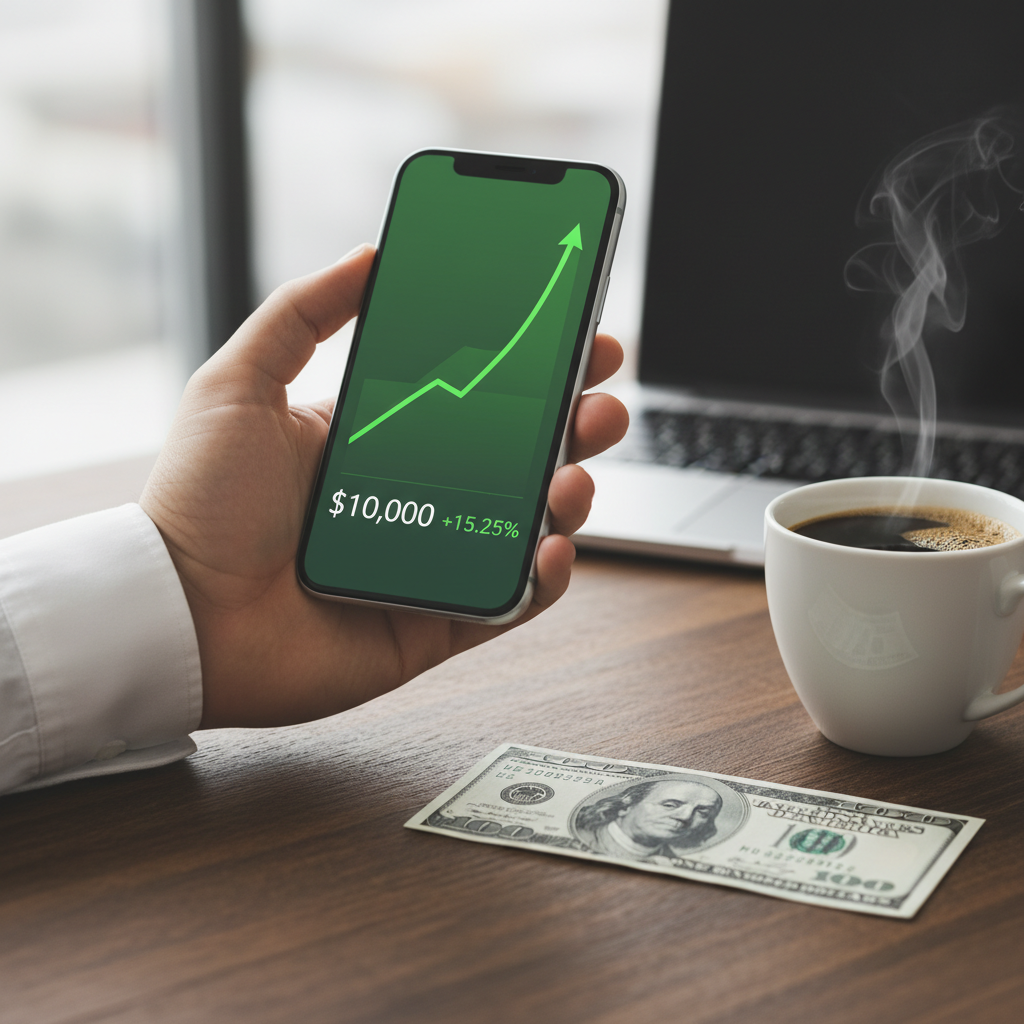
The Mindset Shift: Why $100 is Way More Powerful Than You Think 🧠✨
Before we start throwing your hard-earned cash into the market, we need to fix the mindset. The biggest lie in personal finance is that small amounts of money don’t matter.
The Magic of Compound Interest
Have you ever heard of compound interest? It’s basically the cheat code to building wealth. When you invest money, it earns a return. Then, that return earns its own return. It’s a snowball rolling down a massive hill, picking up more snow and getting ridiculously huge.
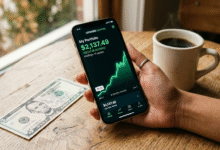
Let’s run the math real quick. Say you take $100 and drop it into an S&P 500 index fund, which historically returns around 8% to 10% on average per year. If you just leave that original $100 there and never touch it for 40 years, it turns into over $2,100. Okay, cool, but not exactly “buy a private island” money.
But what if you decide to invest $100 every single month? After 40 years, assuming an 8% return, you’d be sitting on over $310,000. You only put in $48,000 of your own cash, but compound interest did the heavy lifting for the rest. That’s the flex.
Building the Habit Beats the Dollar Amount
The hardest part about working out is just driving to the gym. Investing is the exact same vibe. Dropping your first $100 breaks the psychological barrier. It gets you off the sidelines and into the game. Once you see your money make money—even if it’s just a few cents at first—it rewires your brain. You stop asking “How can I spend this?” and start asking “How can I invest this?”.
Step 1: Get Your Financial House in Order First 🧹💵
Hold up. I know you’re hyped to buy some stocks, but we gotta do a quick financial vibe check. You wouldn’t build a mansion on top of quicksand, right?
Ghost Your High-Interest Debt
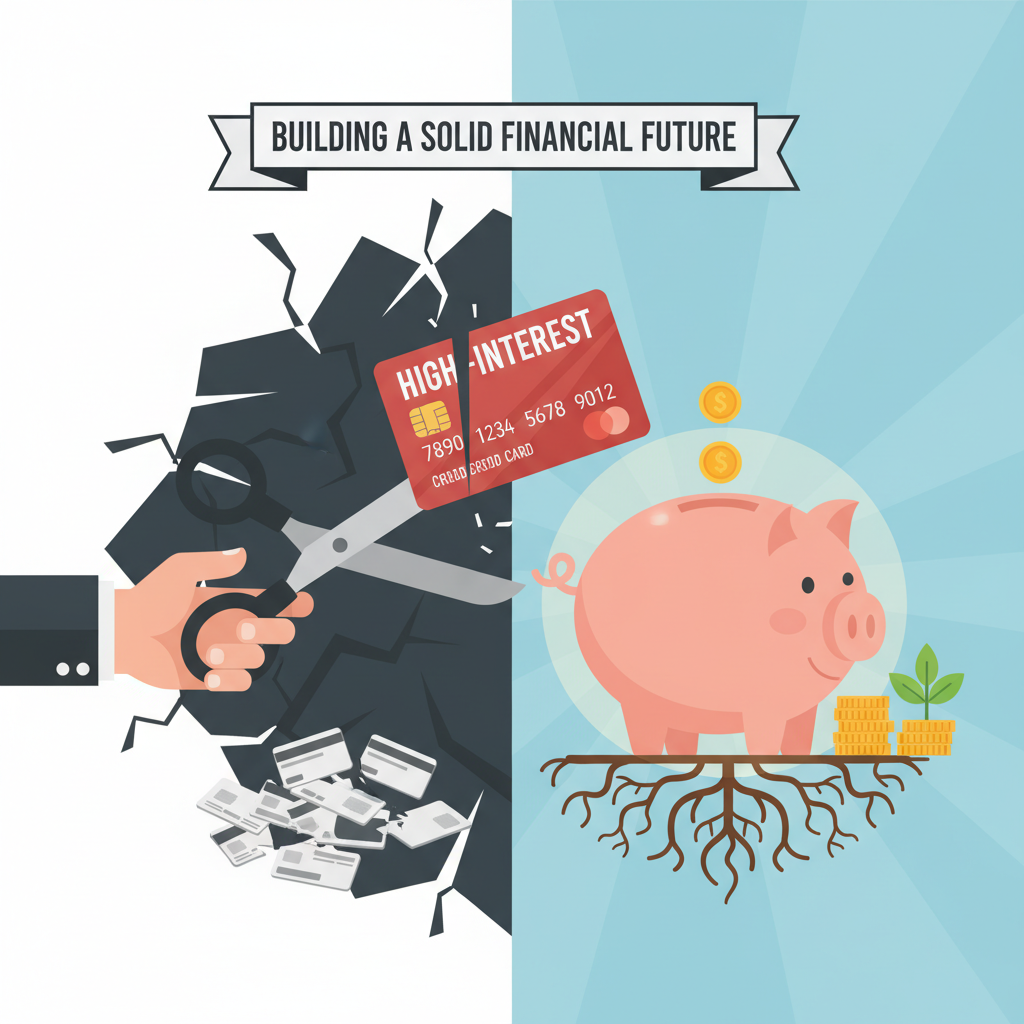
If you have credit card debt with a 25% interest rate, paying that off is basically a guaranteed 25% return on your money. No stock market investment is going to beat that consistently. If you’re drowning in consumer debt, use your $100 to smack that balance down first.
Secure the Mini Emergency Fund
Life comes at you fast. Your car gets a flat tire, your laptop completely dies, or your dog eats a sock and needs to go to the vet. If you invest your only $100 and an emergency hits, you’ll be forced to sell your investments (maybe at a loss) just to cover the bill.
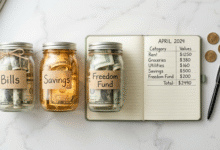
Before you dive into the market, try to stash $500 to $1,000 in a safe High-Yield Savings Account (HYSA). This is your financial bumper pad. It keeps you from stressing out.
Struggling to find extra cash to build that safety net? You seriously need a game plan. Check out How to Create a Monthly Budget for Beginners (That You’ll Actually Stick To in 2026) to get your cash flow sorted. Seriously, budgeting isn’t a trap; it’s permission to spend without the guilt. And if you want to speed up the process, peep these 10 Easy Ways to Reduce Monthly Expenses and Save Big in 2026 so you can free up more cash to invest.
Step 2: Speak the Lingo (Investing 101 for Beginners) 🗣️📚
Wall Street loves to use confusing jargon to make investing sound harder than it actually is. They want you to think you need a Ph.D. in finance to understand it. You don’t. Here is the plain English translation of the terms you need to know:
- Stock: A tiny piece of ownership in a single company. You buy Apple stock, you own a microscopic piece of Apple.
- Bond: You are loaning your money to a company or the government, and they promise to pay you back with interest. It’s safer than stocks, but the returns are usually lower.
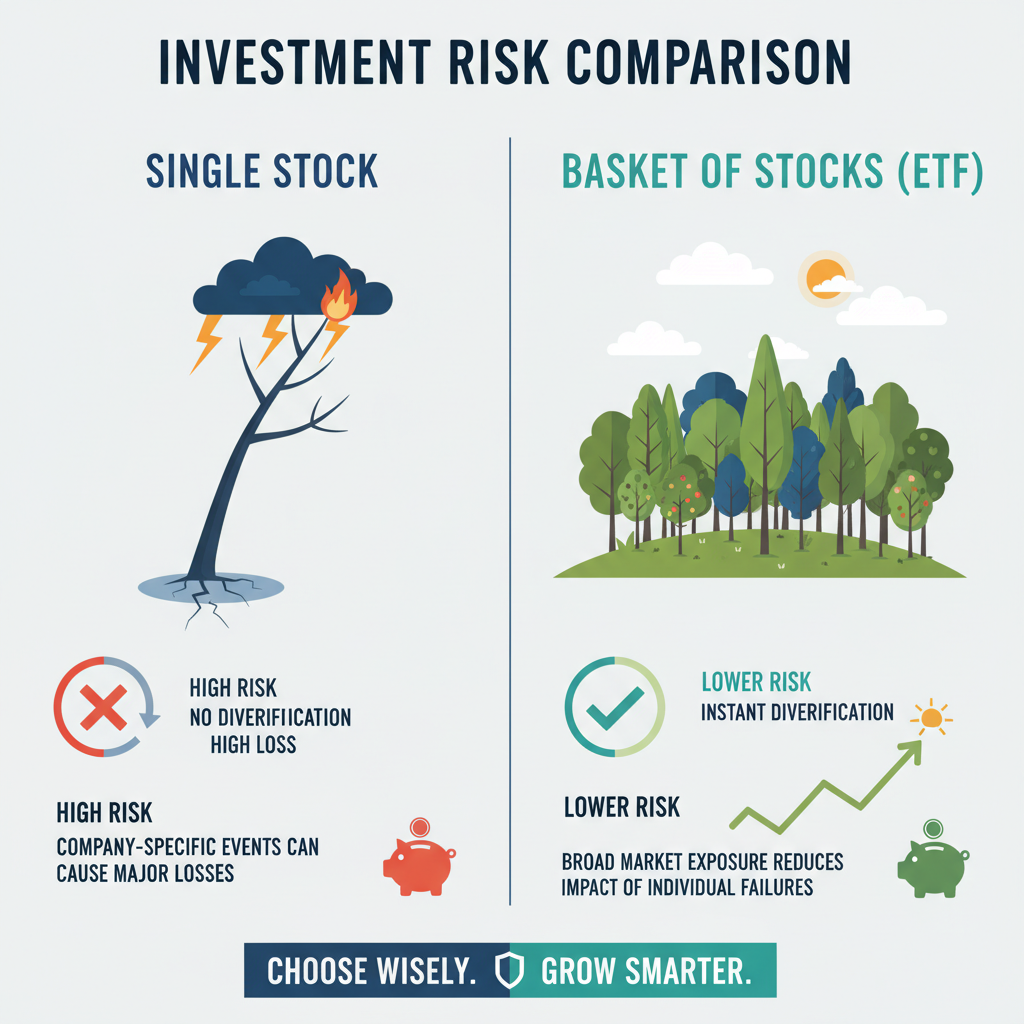
- ETF (Exchange-Traded Fund): This is the holy grail for beginners. Imagine a basket filled with hundreds of different stocks. When you buy one share of an ETF, you are buying a tiny piece of every single company in that basket. It’s instant diversification.
- Index Fund: Very similar to an ETF, but it’s built to track a specific market list, like the S&P 500 (the 500 largest companies in the US).
- Fractional Shares: The real MVP. If a single share of Amazon costs $150, but you only have $10, you can buy a fraction of that share. This is how you invest with small amounts of money.
- Brokerage Account: The app or website you use to actually buy and sell these investments (like Robinhood, Fidelity, or Vanguard).
6 Legit Ways to Invest Your First $100 in 2026 🏆💼
Alright, you’ve got your $100 ready to deploy. Where exactly should you put it? Here are the absolute best, beginner-friendly options to make your money work.
1. Buy Fractional Shares of Your Favorite Companies
Remember when we talked about fractional shares? They totally leveled the playing field. In the old days, if a stock cost $500 and you only had $100, you were locked out. Today, platforms like Fidelity, Schwab, and Robinhood let you buy a slice of a company for as little as $1 to $5.
If you have $100, you could buy $20 worth of Apple, $20 of Tesla, $20 of Microsoft, $20 of Amazon, and $20 of Google. Boom. You just built a mini tech portfolio. The beauty of fractional shares is that you get the exact same percentage return as the billionaires buying full shares. If the stock goes up 10%, your $20 slice grows by 10%.
2. Go All-In on an S&P 500 ETF or Index Fund
If picking individual stocks stresses you out (which is totally fair, it’s risky), the absolute smartest move you can make is throwing your $100 into a broad market index fund or ETF.
Legendary investor Warren Buffett famously said that a low-cost S&P 500 index fund is the best investment for most people. Why? Because instead of trying to find the needle in the haystack, you just buy the whole haystack. When you buy a fund that tracks the S&P 500 (like VOO or SPY), your $100 is automatically spread across the 500 biggest, most profitable companies in America. If one company has a terrible year and crashes, it’s cool, because the other 499 companies are there to hold the line.
3. Use a Robo-Advisor for the “Set It and Forget It” Vibe
Look, not everyone wants to be a stock market nerd. If you want to invest your $100 but don’t want to choose the investments yourself, a Robo-Advisor is your best friend.
Apps like Betterment or Wealthfront use algorithms to build and manage a personalized portfolio for you. You sign up, answer a few basic questions about your goals and how much risk you can stomach, and deposit your $100. The robo-advisor automatically splits your money into a highly diversified mix of stocks and bonds. They even automatically rebalance your portfolio behind the scenes. It’s the ultimate lazy hack to building wealth.
4. Park It in a High-Yield Savings Account (HYSA)
Wait, is saving actually investing? In a high interest rate environment, absolutely. Traditional banks pay you basically zero interest (we’re talking like 0.01%, which is just disrespectful). But online High-Yield Savings Accounts currently offer much higher APYs (Annual Percentage Yields).
If you want zero risk of losing your original $100, putting it in an HYSA is the move. Your money is federally insured, it’s completely liquid (meaning you can withdraw it anytime), and it earns a decent guaranteed return every month. This is the perfect spot for your emergency fund or money you might need in the next year or two.
5. Start Micro-Investing with Spare Change Apps
If finding $100 all at once feels tough, you can literally start with the loose change in your virtual couch cushions. Micro-investing apps like Acorns are brilliant for total beginners.
You link your debit or credit card to the app. Every time you buy something, the app “rounds up” to the nearest dollar and invests the difference. So, if you buy an iced coffee for $4.50, the app rounds it up to $5.00, takes that extra 50 cents, and drops it into a diversified ETF portfolio. It feels completely painless because you don’t even notice the money leaving your account. Before you know it, all those round-ups turn into a solid $100 investment, and then $1,000, and it just keeps growing.
6. Boost Your Employer 401(k) or Open an IRA
Don’t sleep on retirement accounts. If your job offers a 401(k) and they do a “company match,” you need to jump on that immediately. A match means if you put in a certain percentage of your paycheck, your boss puts in the exact same amount. That is literally free money.
If you don’t have a 401(k), you can open a Roth IRA (Individual Retirement Account). You can fund it with your $100, and the massive flex here is that all the money grows tax-free. When you pull it out at retirement age, the IRS can’t touch your profits. That’s a massive win.
Step 3: Choose the Right Brokerage App 📱🏦
Alright, you’ve got the strategy. Now you need the actual tool to execute the play. In 2026, the best brokerages all have a few things in common: $0 account minimums, $0 commission fees on trades, and the ability to buy fractional shares.
Here are some top-tier options for beginners:
- Fidelity: The undisputed heavyweight champ. They offer fractional shares, zero fees, and incredible customer support. They even have their own “Zero” index funds with absolutely no expense ratios.
- Charles Schwab: Another massive, reliable platform that offers fractional shares (they call them “Stock Slices”). Great for long-term investors.
- Robinhood: Say what you want about them, but their app interface is sleek, clean, and ridiculously easy to use for a first-timer.
- SoFi Invest: Awesome for beginners because it combines investing, checking, and savings all in one app.
If you are trying to figure out which apps belong on your phone to get your financial life together, definitely read up on the Best Budgeting Apps in 2026: The Ultimate Guide for Beginners. Tracking your money is just as important as investing it!
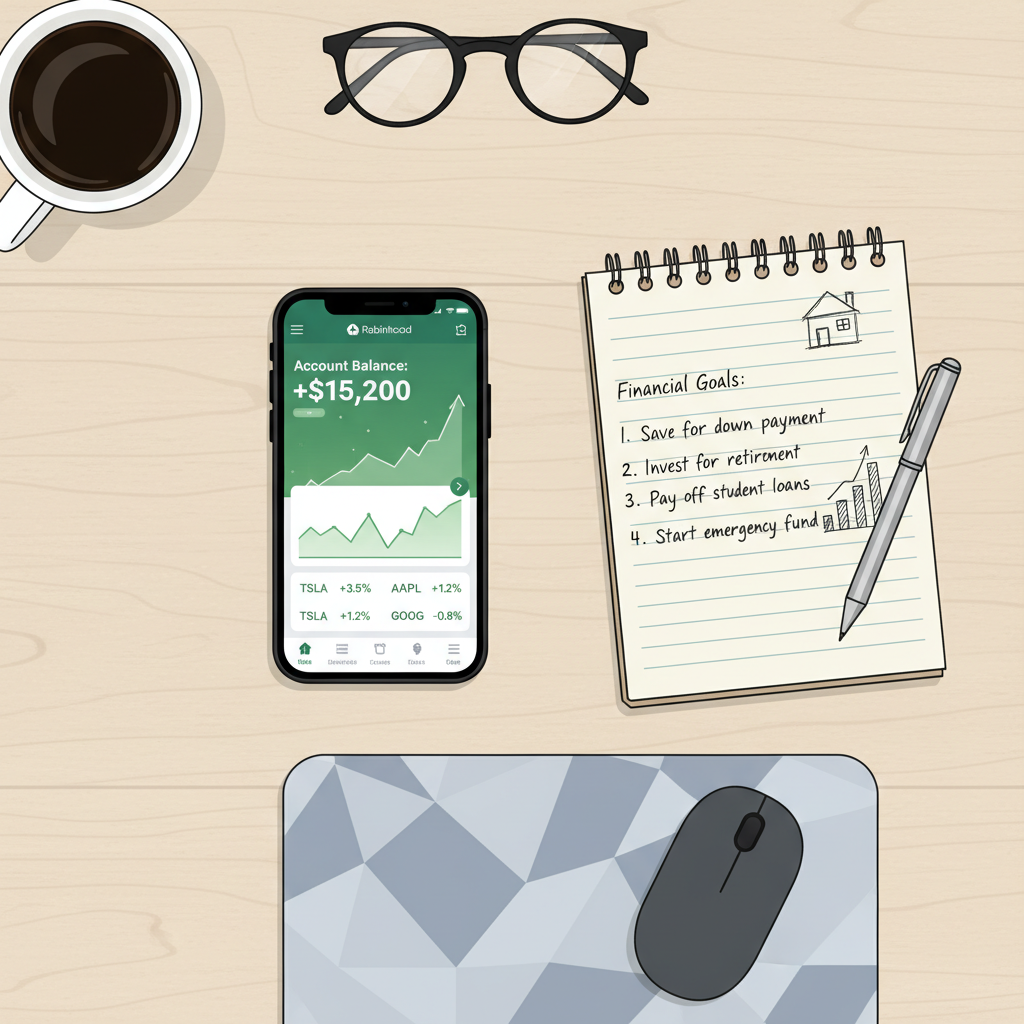
A Step-by-Step Walkthrough: Executing Your First Trade 🎯
I know pressing that “Buy” button for the first time is nerve-wracking. Your palms are sweating, and you feel like you might accidentally delete your bank account. Let’s demystify it. Here is exactly how to invest your first $100 in an ETF like the S&P 500 (Ticker symbol: VOO).
- Download and Sign Up: Pick an app (like Fidelity), download it, and create an account. You’ll need your Social Security Number. Don’t freak out; this is standard and required by law for taxes.
- Link Your Bank: Connect your checking account and securely transfer your $100.
- Search the Ticker: Once the money clears, hit the search bar and type in “VOO” (which is Vanguard’s S&P 500 ETF).
- Hit Buy: Select the option to buy.
- Market Order vs. Limit Order: The app will ask what type of order you want to place. Choose a Market Order, which just means “buy it right now at whatever the current price is.”
- Enter the Dollar Amount: Since you only have $100, make sure you select the option to buy in dollars, not shares. Type in $100.00.
- Swipe up or confirm.
Congratulations! 🎉 You are officially an investor. You now own a microscopic slice of Apple, Amazon, Google, Microsoft, and 496 other massive companies. Welcome to the club.
The Long Game: Automating and Growing Your Portfolio 📈
Investing your first $100 is an epic milestone, but it’s just the starting line. To actually build wealth that changes your life, you need to turn this one-time event into a ruthless, consistent habit.
Automate That Cash Flow
Willpower is overrated. If you have to manually transfer money to your investment account every month, you’ll eventually forget, or you’ll decide to spend it on UberEats instead.
The secret sauce is automation. Go into your brokerage app and set up a recurring deposit. Tell the app to pull $25, $50, or $100 from your bank account every single time you get paid. You won’t even miss the money, and your portfolio will grow in the background while you sleep. This strategy is called Dollar-Cost Averaging (DCA). It means you are constantly buying in, whether the market is up or down, which completely removes the stress of trying to “time” the market perfectly.
Turn on DRIP (Dividend Reinvestment Plan)
Some companies and ETFs pay you a small cash bonus just for holding their stock. This is called a dividend. By default, that cash just sits in your account. You want to go into your settings and turn on automatic dividend reinvestment (DRIP). This takes those pennies and automatically buys more fractional shares, turbocharging your compound interest.
Do Not Panic Sell
The stock market is a rollercoaster. There will be days, weeks, or even months where your $100 drops to $85. That is completely normal.
Do not panic.
Do not sell.
When the market drops, it’s not a crash; it’s a discount sale. Keep your automated deposits running and let time do the work. The only way you actually lose money is if you sell while it’s down. Keep those diamond hands strong.

Frequently Asked Questions (FAQs) 🤔
Can I actually get rich starting with just $100?
Yes, but you have to check your timeline. $100 on its own isn’t going to buy you a Lambo by next Tuesday. But taking that first $100, building the habit, and consistently investing small amounts over 10, 20, or 30 years is exactly how everyday people become millionaires. Compound interest is the great equalizer.
What if I lose my $100?
Risk is a real thing. If you put your $100 into a shady penny stock or a random cryptocurrency you saw on Reddit, yeah, you could lose it all. But if you invest in a broadly diversified index fund (like the S&P 500) and hold it for the long term, the historical odds of losing all your money are basically zero. The entire US economy would have to collapse forever. And if that happens, we’ve got bigger problems than your brokerage account.
Should I invest my first $100 in Crypto?
Crypto is wild, volatile, and high-risk. While putting a tiny percentage of your overall wealth into Bitcoin or Ethereum is fine, it shouldn’t be your first investment. Build a solid, boring foundation with index funds or ETFs first. Let the boring stuff make you rich, and use crypto for the speculative plays later down the road.
Does it cost money to start investing?
Not anymore! Major brokerages like Fidelity, Vanguard, and Schwab charge exactly $0 to open an account and $0 in commission fees to buy stocks and ETFs. Just watch out for management fees if you use a robo-advisor, though they are usually very low (like 0.25% a year).
The Bottom Line 🏁
Starting your investing journey doesn’t require a trust fund, an inheritance, or a six-figure salary. All you need is $100, a smartphone, and the discipline to think long-term.
By paying off toxic debt, building a small cash safety net, and utilizing tools like fractional shares and broad-market ETFs, you are putting yourself lightyears ahead of most people. Stop ghosting your financial future. Open the app, fund the account, set up your automations, and let the market do its thing.
You’ve got the blueprint. Now, it’s time to go execute. Let’s get that bag! 💼🔥
Disclaimer: The information provided in this article is for educational and informational purposes only. You should consider checking resources from Investor.gov or speaking with a certified financial planner before making major money decisions.
It means so much to us that you read this article — thank you for your continued support and loyalty!