The Ultimate Beginner Guide to the Stock Market in 2026 (No Cap)
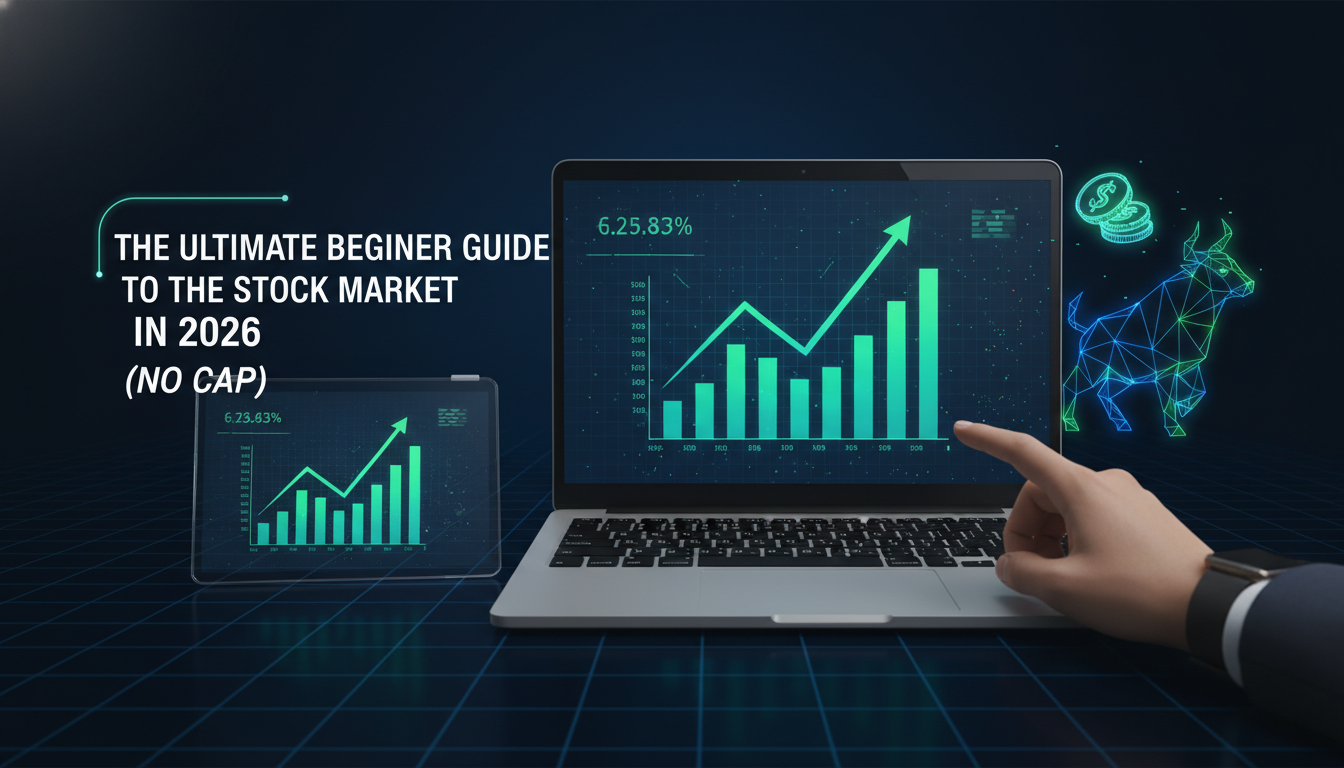
Ready to build wealth? Our beginner guide to the stock market breaks down how to buy stocks, pick brokers, and invest your first bucks without the headache.
Are you tired of scrolling through your feed and seeing everyone flex their massive gains while your savings account is sitting there collecting pennies? I feel you. The financial world can look like this exclusive VIP club where only guys in tailored suits from Wall Street get to make the real dough. But let’s keep it a buck—that’s a total myth. In 2026, investing is literally for everyone. You don’t need a fancy finance degree from an Ivy League school. You just need a smartphone, a few extra dollars, and a solid game plan to get started. 🚀
This is your official beginner guide to the stock market. We’re cutting out all the confusing jargon. No boring textbook lectures here. Just straight facts on how to put your money to work so you can eventually step back, chill, and let your investments do the heavy lifting. Whether you want to buy your first share of a tech giant or just understand what the heck an index fund is, you’re in the right place. Grab an energy drink or a coffee, and let’s secure the bag. ☕💸
What the Heck is the Stock Market Anyway?
Before we start throwing money around, we need to cover the stock market basics. Imagine a massive global farmers market. But instead of people buying and selling organic tomatoes and artisan bread, they’re buying and selling tiny pieces of massive companies. That’s the stock market in a nutshell.
What is a Stock?
When you buy a ‘stock’ (also called a ‘share’), you are literally buying a tiny slice of ownership in that specific company. If you buy a share of Apple, you are technically a part-owner of Apple. Yes, your ownership might be 0.00000001%, but it still counts! As the company sells more iPhones and makes more profit, the value of the company goes up. Because you own a piece of the pie, the value of your share goes up too. If the company totally bombs and loses money, the value of your share drops. It’s highkey that simple.
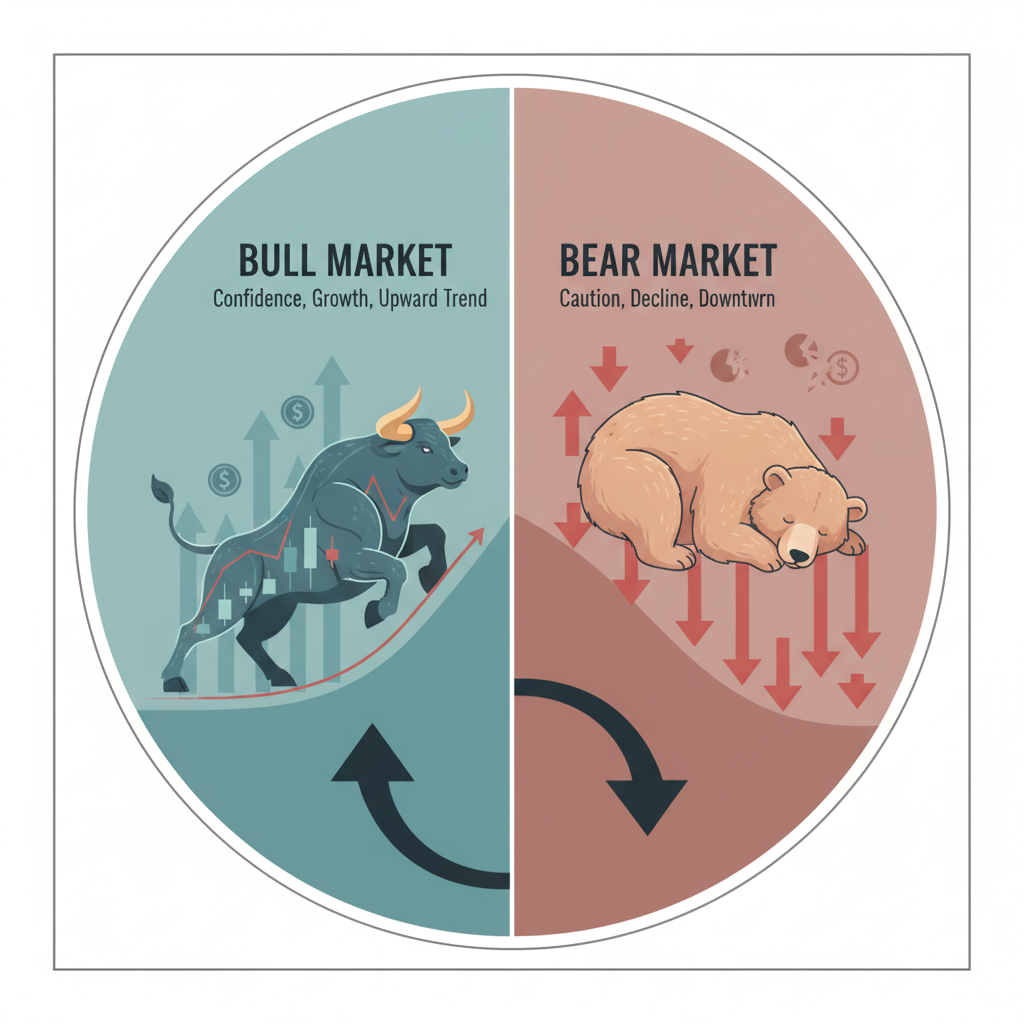
Bulls vs. Bears 🐂🐻
You’re going to hear these two animal names thrown around constantly in the financial world.
- The Bull Market: This is when the market is charging upward. Prices are rising, the economy is thriving, and investors are feeling super optimistic. Everyone is making money and the vibes are immaculate.
- The Bear Market: This is when the market is hibernating or swiping downward. Prices are falling, people are panicking, and the economy might be in a recession.
Here’s the secret sauce that most rookies don’t get: Bear markets aren’t the end of the world. In fact, seasoned investors view bear markets like a massive Black Friday sale. When stocks are down, they’re ‘on discount.’ You buy the dip and ride the wave when the bull market inevitably returns.

Why Hiding Cash Under Your Mattress is a Massive L
A lot of beginners ask, ‘Why should I risk my hard-earned cash in the market? Why not just leave it in a checking account where it’s safe?’
Honestly? Because keeping all your money in cash is a guaranteed way to lose wealth. Let me explain.
The Silent Thief: Inflation
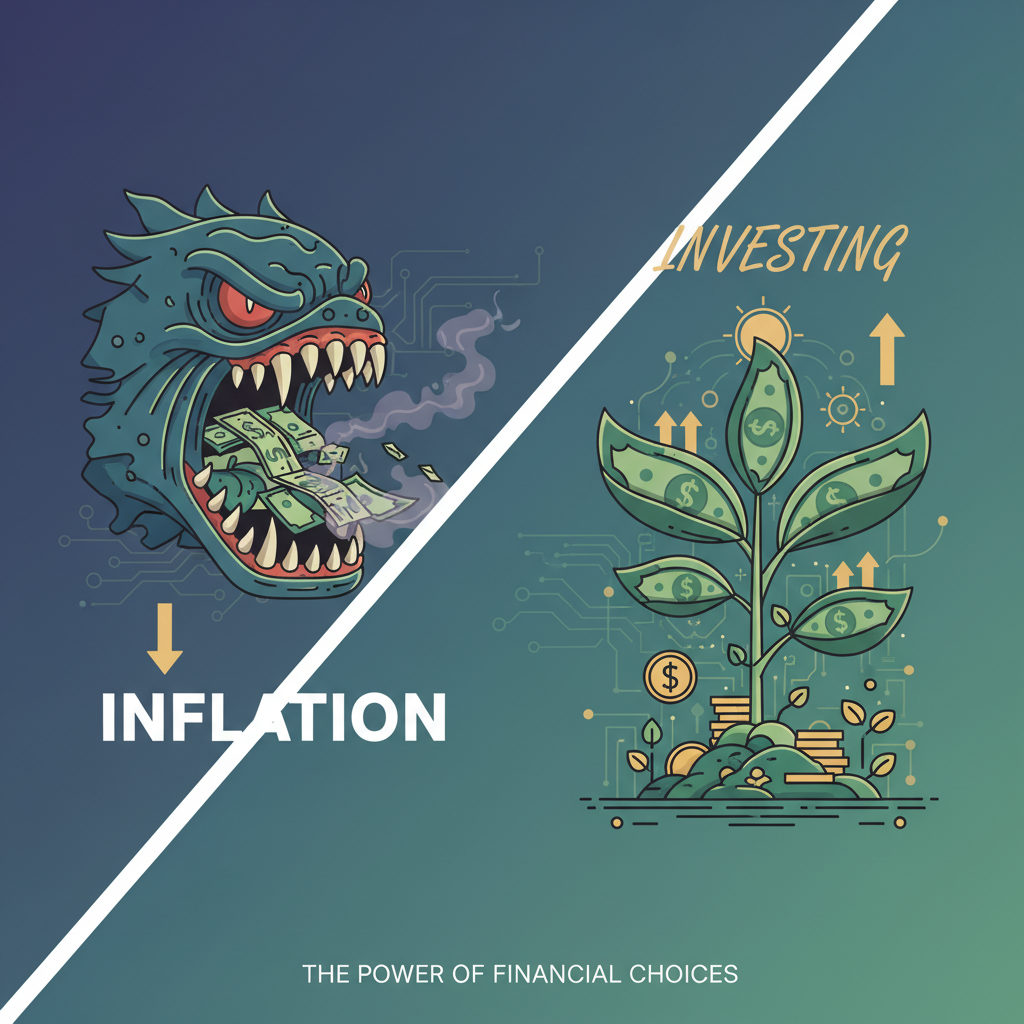
Inflation is the invisible monster that eats your money’s purchasing power every single year. Let’s say inflation is running at 3%. That means a pair of sneakers that costs $100 today will cost $103 next year. If you keep your $100 hidden under your mattress, it’s still exactly $100 next year—but now you can’t afford those sneakers. Your money lost its power. Investing is how you outpace inflation and actually grow your wealth.
The 8th Wonder of the World: Compounding Interest
Albert Einstein reportedly called compounding interest the 8th wonder of the world, and he wasn’t capping. Compounding interest is when the money your money makes… starts making its own money.
Let’s run a quick math example because this is mind-blowing. Let’s say you invest $200 a month into an index fund that returns about 8% per year on average.
- In 10 years, you’ve put in $24,000 out of your own pocket. But thanks to compounding, your account is worth around $36,000.
- In 20 years, you’ve put in $48,000. But your account is sitting at nearly $118,000.
- In 30 years, you’ve contributed $72,000 total. But your account balance? Over $300,000. 🤯
That’s the magic. You didn’t work extra shifts for that $228,000 of profit. Your money worked the night shift for you. For more detailed calculators on how this works, you can check out the official US government resource at Investor.gov.
Step 1: Check Yourself Before You Wreck Yourself (Financial Prep)
You can’t build a mansion on a swamp. Before you jump into the market, you need to make sure your financial house is in order. Do not skip this step, or you’ll get burned.
The ‘Oh Crap’ Fund
Life happens. Car engines blow up, medical bills drop out of nowhere, and laptops spill coffee on themselves. Before you buy a single stock, you need an emergency fund sitting in a basic, easy-to-access savings account. Aim for 3 to 6 months of living expenses. If the market crashes and you suddenly need cash, you do NOT want to be forced to sell your stocks at a massive loss just to fix your car.
Crush the Bad Debt First
If you have credit card debt charging you 25% interest, it makes literally zero sense to invest in the stock market hoping for an 8% return. The math just ain’t mathing. You are losing 25% to make 8%. Pay off those high-interest toxic debts first! If you are overwhelmed and don’t know how to tackle it, you need a solid game plan. I highly recommend checking out our breakdown on the Debt Snowball vs Avalanche Method: Which Strategy Crushes It Best? to figure out the fastest way to get to zero debt.
Free Up Your Cash with a Budget
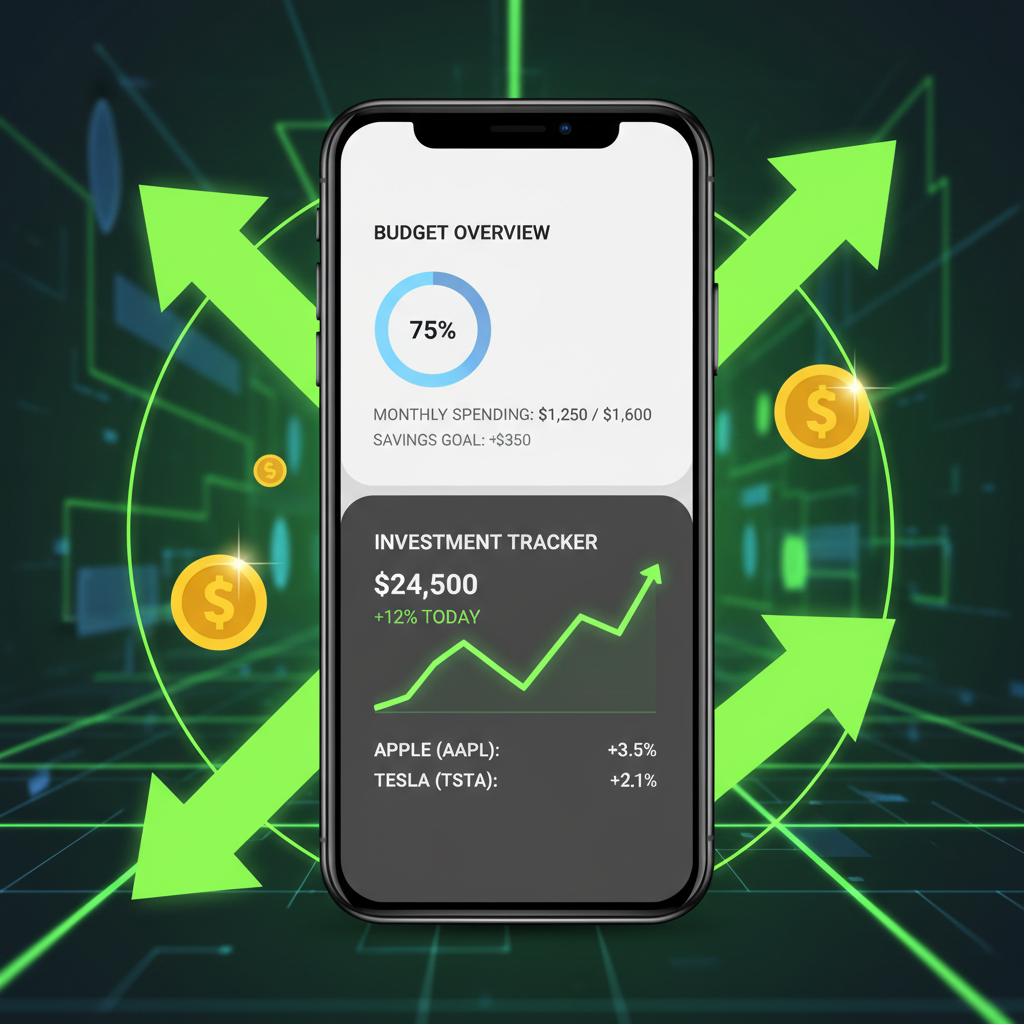
‘But I don’t have any money left over to invest!’ I hear you. But usually, when people actually track their spending, they find hidden dough going to subscriptions they don’t use or ordering takeout five times a week. You need to track your spending. Grab an app, set some limits, and find that extra $50 or $100 a month. Need help picking the right tool? Peep our guide on the Best Budgeting Apps in 2026: The Ultimate Guide for Beginners.
Step 2: Opening a Brokerage Account (Your Gateway to the Market)
You can’t just walk into a Walmart and buy a share of Amazon. You need a middleman. That middleman is called a ‘brokerage.’ Back in the day, you had to call a guy named Gary on a landline and pay him $50 per trade just to buy a stock. Today? Opening a brokerage account is as easy as downloading an app and takes about 5 minutes.
What to Look For in a Brokerage in 2026
When you are picking your platform, here is what you need to demand:
- Zero Commission Fees: You shouldn’t be paying a fee just to hit the ‘buy’ button. Almost all major brokers offer $0 commission trades now.
- Fractional Shares: This is a massive W for beginners. A single share of a big tech company might cost $500. If you only have $50, fractional shares let you buy 1/10th of that stock. You buy a slice of the pizza instead of the whole pie.
- Clean UI: You want an app that is easy to read, not a dashboard that looks like a spaceship control panel.
Major players like Fidelity, Charles Schwab, Vanguard, and modern apps like Robinhood or Webull all have their pros and cons. Pick one that feels right for you, download it, verify your identity (they are legally required to ask for your Social Security Number to prevent money laundering), and link your bank account.
Step 3: What’s Actually on the Menu? (Asset Types)
Alright, your account is funded. You’re logged in. Now what? You have thousands of options. Understanding what to buy is the core of stock market investing strategies. Let’s break down the main categories.
Individual Stocks
This is when you buy a share of one specific company. Like Netflix, Tesla, or Nike.
- Pros: If the company explodes in growth, you make massive returns.
- Cons: It’s super risky. If the CEO gets caught in a scandal or their new product flops, your investment can tank overnight.
If you buy individual stocks, stick to ‘Blue-Chip’ stocks at first. These are massive, established companies with a long history of making money.
Penny Stocks
Just… don’t. Penny stocks are shares of tiny, unproven companies that trade for a few bucks or even pennies. Beginners see them and think, ‘Wow, if this goes from $0.10 to $1.00, I’ll be rich!’ But it’s usually a trap. They are highly manipulated and wildly volatile. Keep it moving.
Dividend Investing
Some companies make so much profit that they literally don’t know what to do with it all. So, they distribute a portion of that cash back to their shareholders every quarter. This is called a dividend. It’s the ultimate passive income. You buy the stock, and they deposit cash into your account just for holding it. You can even set it to automatically reinvest that cash to buy MORE shares. Boom. Infinite loop.
Index Funds and ETFs (The Holy Grail for Beginners)
If you only take one thing away from this massive guide, let it be this. Index funds for beginners are the ultimate cheat code to wealth.
Instead of trying to find the needle in the haystack (picking one winning stock), an index fund lets you buy the entire haystack. For example, an S&P 500 ETF (Exchange Traded Fund) tracks the 500 largest companies in the United States. By buying just ONE share of an S&P 500 ETF, you are instantly investing a tiny bit of your money into Apple, Microsoft, Google, Amazon, and 496 other massive companies.
If one company goes bankrupt, who cares? You have 499 others holding you up. It provides instant diversification and historically averages about an 8-10% return per year over the long run.

Step 4: Making the Move (How to Actually Buy Stocks)
Okay, you know what you want. Let’s talk about how to actually push the buttons without messing up.
Anatomy of a Ticker Symbol
Every company on the stock market has a nickname, called a Ticker Symbol. It’s usually 1 to 4 letters.
- Apple is AAPL.
- Microsoft is MSFT.
- Ford is F.
You search this ticker symbol in your brokerage app to find the stock.
Market Order vs. Limit Order
When you hit the buy button, you’ll be asked what kind of order you want to place.
- Market Order: This tells the broker, ‘I don’t care about the exact price, just get me the stock RIGHT NOW at whatever the current price is.’ It’s fast, but if the market is moving crazy, you might pay slightly more than you expected.
- Limit Order: This tells the broker, ‘I only want to buy this stock if the price drops to exactly $150 or lower.’ If the stock never drops to $150, your order never goes through. It gives you control.
For a total beginner buying long-term index funds, market orders are usually totally fine. Just hit buy and chill.
Want to see exactly how to execute this when you’re working with a tight budget? Check out our step-by-step tutorial: How to Start Investing With $100 in 2026: The Ultimate Grind Guide.
Step 5: Strategies to Keep You From Losing Your Shirt
Managing risk in stocks is what separates the gamblers from the investors. You want to be an investor. Here is your survival guide.
Diversification
We already touched on this with ETFs, but it’s worth repeating. Never put all your eggs in one basket. If you invest 100% of your life savings into one random tech startup and it fails, you are toast. Spread your money across different sectors: tech, healthcare, real estate, and consumer goods.
Dollar-Cost Averaging (DCA)
Trying to ‘time the market’ (buying at the exact lowest point and selling at the exact highest point) is impossible. Even the Wall Street pros can’t do it. Instead, use Dollar-Cost Averaging.
DCA means you invest a set amount of money on a set schedule, no matter what the market is doing. For example, you invest $100 every single Friday.
- If the market is up, your $100 buys fewer shares.
- If the market crashes, stocks are on sale, and your $100 buys MORE shares.
Over time, this smooths out the crazy roller coaster of the market and removes all the emotion from your investing. Set it to auto-invest, delete the app, and go live your life.
The Psychological Game of Investing (Mindset is Everything)
You can know all the math in the world, but if you don’t have the right mindset, the market will chew you up and spit you out.
FOMO and Meme Stocks
FOMO (Fear Of Missing Out) is dangerous. You’ll see a random cryptocurrency or a meme stock shooting up 400% in a week, and everyone on TikTok is screaming about it. You feel the urge to throw your rent money into it so you don’t miss out. Stop. By the time everyone on social media is talking about a massive run-up, you’re already too late. Buying at the top based on hype is how you become a ‘bagholder’ (someone stuck holding a stock that lost all its value).
Diamond Hands vs. Paper Hands
The stock market is volatile. It will go up 2% one day and drop 3% the next. In 2008 and 2020, the market saw massive, terrifying crashes.
When a crash happens, rookies get ‘paper hands’—they panic, sell everything at a massive loss, and swear the stock market is a scam.
Veterans have ‘diamond hands’—they hold tight, stay calm, and actually buy MORE stock while it’s cheap. If you are investing in broad index funds and strong companies, history shows that the market always recovers and hits new all-time highs eventually. Zoom out your timeline. Stop stressing over what the market does in a week; focus on what it does over a decade.

Taxes: The Unsexy Part You Gotta Know
Nobody likes talking about taxes, but if you want to keep your dough, you need to understand the rules. The government wants their cut of your gains. To read the deep legal definitions, you can always visit the Securities and Exchange Commission (SEC), but here is the plain English version.
Capital Gains Taxes
When you buy a stock for $100 and sell it for $150, you made $50 in profit. That profit is called a ‘Capital Gain.’ You only owe taxes on the GAIN, not the total amount.
- Short-Term Capital Gains: If you buy a stock and sell it in LESS than a year, the IRS treats that profit just like your regular paycheck. It gets taxed at your normal, higher income tax rate.
- Long-Term Capital Gains: If you hold the stock for MORE than a year before selling, the IRS rewards you with a massive tax discount. The long-term tax rates are significantly lower (sometimes even 0% depending on your total income).
The lesson? Buy and hold. Day trading is a tax nightmare.
Tax-Advantaged Accounts
Instead of a normal, taxable brokerage account, look into an IRA (Individual Retirement Account) or a Roth IRA. With a Roth IRA, you put in money you’ve already paid taxes on, you invest it, and when you withdraw it at retirement, ALL THE PROFIT IS 100% TAX-FREE. It is arguably the greatest wealth-building tool legally available to Americans.
Frequently Asked Questions (The Beginner FAQs)
I know we just covered a ton of ground. Let’s rapid-fire through some of the most common questions beginners have when they are staring at their screens.

1. Can I lose more money than I invest?
If you are just buying standard stocks and ETFs, NO. The absolute worst-case scenario is that the company goes totally bankrupt and the stock goes to zero. If you invested $100, you lose $100. You will never owe extra money. (Note: This assumes you aren’t doing advanced stuff like ‘trading on margin’ or ‘short selling’. As a beginner, stay far away from margin. Only invest cash you actually have).
2. How much money do I need to start investing?
Literally $5. Thanks to fractional shares, you don’t need thousands of dollars. The most important thing is simply building the habit of investing regularly, even if it’s just the price of a cup of coffee every week.
3. How do I know when to sell my stocks?
If you are following the long-term index fund strategy, the answer is usually: ‘When you are retiring and actually need the money to live on.’ Alternatively, if you bought an individual stock, you sell when the fundamental reason you bought the company changes. If you bought a company because of a brilliant CEO, and that CEO leaves, maybe it’s time to re-evaluate.
4. What happens if the brokerage app goes out of business?
Your money doesn’t just vanish. Legit brokerages are regulated and insured by the SIPC (Securities Investor Protection Corporation). The SIPC protects your investments up to $500,000 if the brokerage firm fails. Your shares are just transferred to another broker.
5. How do I research individual companies?
If you want to step away from index funds and pick individual stocks, you need to do homework. Look at a company’s P/E Ratio (Price-to-Earnings), read their quarterly earnings reports, and see if their revenue is growing year over year. Sites like Yahoo Finance provide massive amounts of free data to help you analyze tickers.
6. Are cryptocurrencies part of the stock market?
No. Crypto is an entirely different asset class traded on different exchanges. It is vastly more volatile and operates on different rules. While some brokerages let you buy Bitcoin alongside your stocks, treat them as two completely different beasts. Keep your crypto allocation small and highly speculative.
The Final Word
Wrapping it all up, the stock market isn’t some mystical casino designed only for the rich. It’s simply the greatest wealth-building engine ever created, and the barrier to entry has never been lower.
The biggest mistake you can make right now is getting paralyzed by ‘analysis paralysis.’ You don’t need to know every single financial metric to get started. You don’t need a perfectly optimized portfolio. You just need to take the first step. Open the account. Fund it with a few bucks. Buy a broad index fund. Set up an automatic monthly transfer.
Time is your biggest advantage in the market. The money you invest in your 20s or 30s is insanely powerful because it has decades to compound and multiply. So stop overthinking it, get your budget tight, avoid the hype of meme stocks, and start building your financial future today. You got this. 🚀💎🙌
Thank you for choosing to spend your time with us by reading this article — we hope you enjoyed it!